
The payments industry is at a crossroads with the banking regulator on two pressing issues, neither of which seems headed towards an amicable solution. Depending upon which side accommodates the other, customers in India will have to choose between convenience and ironclad safety. In the end, the Reserve Bank of India (RBI), which regulates both banks and all payments services providers, will prevail. But the question is: will it do so by bending a little or by sticking to its firm stand? The two issues - one concerning payment facilitators storing customers' card details and the other about auto-renewal of payments - appear similar but aren't.

Union Finance Minister Nirmala Sitharaman on Tuesday said the mass consumption items such as pulses, wheat, rice, flour, and curd will not attract the 5 per cent goods and services tax (GST) when sold loose, and not pre-packed or pre-labelled. The clarification came amid protests and widespread criticism by Opposition Members of Parliament over foisting GST on daily-use essentials and subsequent price rise. The all-powerful GST Council, chaired by the Union minister, had last month decided to impose GST on some mass consumption items to simplify the rate structure, which came into effect on Monday.

Exporters on Thursday demanded fiscal incentives, tweaking in customs duties on certain products and credit at affordable rates in the forthcoming Budget to boost exports and create jobs. In a pre-budget virtual meeting with Finance Minister Nirmala Sitharaman, the Federation of Indian Export Organisations (FIEO) said the depreciation of the rupee against the US dollar is affecting exports' competitiveness and the sector requires more support. "Creation of employment is the biggest challenge faced by the country...We would urge the government to provide fiscal support to units which provide additional employment in the export sector," the exporter's body said.

Formal announcement of venture into new segment on Thursday; group's entry timely, given the demand, say experts

Nine companies incubating at StartupVillage have made it to the second round of Nasscoms flagship programme to support 10,000 technology startups across India.

India's economic growth surged to 20.1 per cent in the April-June quarter of this fiscal, helped by a low base of the year-ago period, despite a devastating second wave of COVID-19. The gross domestic product (GDP) had contracted by 24.4 per cent in the corresponding April-June quarter of 2020-21, according to data released by the National Statistical Office (NSO) on Tuesday. The government had imposed a nationwide lockdown at the onset of the COVID-19 pandemic last year.

State Bank of India partnered GE Capital in 1998 for its credit card business.

Snapdeal and Flipkart to battle it out over Express Delivery

The Indian economy remains on track to regain its position as the world's fastest-growing major economy after official estimates on Friday put the expansion at a tempered 9.2 per cent this fiscal amid concerns over the impact of a resurgent virus on the fragile recovery. The growth in the gross domestic product (GDP) of 9.2 per cent in April 2021 to March 2022 fiscal (FY 2021-22) given by the National Statistical Office (NSO) in its first advance estimate compares with 9.5 per cent expansion forecast by the Reserve Bank of India (RBI) last month. The economy had contracted by 7.3 per cent in the previous financial year.

'You have to hand it to Mukesh for sheer daring.' 'Who else in India would have sunk a stupendous $30 billion in a business that was yet to get a single customer?' 'With that, the older of the Ambani siblings has shown that he is in a class of his own,' says T N Ninan.

Trust today means more than the belief that a brands' products will work as advertised; consumers want to believe that the company truly cares for its customers.

The cash crunch following demonetisation and transaction fees that do not cover costs are among the reasons why the sector is struggling.
Finance Minister Nirmala Sitharaman on Thursday said taxpayer base has almost doubled to 1.28 crore in four years of rollout of the historic tax reform and the enhanced GST mop up in the recent months should now be the "new normal". In a written message to tax officers on the fourth anniversary of GST rollout, she said implementing any reform of this scale in a large and diverse country like India can be highly challenging, but GST has brought about ease in taxpayer compliance and reduced common man's tax burden.

VMUnify, incubated from staffers' idea, to be spun off into an independent company.

Till now, Jio was primarily targeting the prepaid customer base, with only a few post-paid plans. Now, it is targeting post-paid customers, who usually spend over five times their prepaid counterparts and are more company-loyal.
GST necessarily includes service tax, but VAT can only be on goods without including service tax

The country's gross domestic product (GDP) is expected to grow at around 18.5 per cent with an upward bias in the first quarter of the current financial year, according to SBI research report Ecowrap. This estimate is lower than the Reserve Bank of India's GDP growth projection of 21.4 per cent for the April-June quarter. "Based on our 'Nowcasting' model, the forecasted GDP growth for Q1 FY22 would be around 18.5 per cent (with upward bias)," the report said. Higher growth in Q1 FY22 is mainly on account of a low base.

The operating profit growth rate of mobile service providers is expected to double in next two years buoyed by increase in call rates and clarity in policy, credit rating agency CRISIL has said.
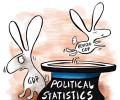
The GDP growth is estimated to come at the "deceptively high" level of 20 per cent for the April-June 2021 quarter but is far below the same in the pre-COVID times, rating agency Icra said on Wednesday. Icra said the low base of the last year, when the GDP had contracted by close to 24 per cent, "conceals" the impact of the second wave of COVID-19 infections. Economic activity is boosted by robust government capital expenditure, merchandise exports and demand from the farm sector, it said, estimating the GDP to grow by 20 per cent and the gross value added (GVA) will register a growth of 17 per cent for the June quarter.

Maharashtra's "radical" lockdown move will have an economic impact of Rs 40,000 crore, with the trade, hotels and transport sector to bear the biggest dent, Care Ratings said on Monday. The rating agency said the loss of economic activity will have a 0.32 per cent impact on the gross value added (GVA) growth at the national level. It revised down its national GDP growth estimate to 10.7 - 10.9 per cent from the 11 - 11.2 per cent given a week ago. Maharashtra has been contributing nearly 60 per cent to the daily COVID-19 infections nationally and had over 57,000 new cases on Sunday.

Besides, the ongoing war between Russia and Ukraine has also added another blow to FMCG makers as they expect a rise in the prices of wheat, edible oil and crude. Companies such as Dabur and Parle are watching the situation and will undertake calibrated price increases to mitigate the inflationary pressures.

Phee Teik Yeoh, the recently anointed chief executive officer of the airline, speaks to Business Standard on his aim of changing the rule of the game in the aviation sector by redefining service and operational experience for travellers accustomed to mere functionality.

There's no place like home, but even for the affluent buying one in India is difficult. On top of that, the coronavirus pandemic-now in its eighteenth month-has made life uncertain. A hopeful thing is buying a house looks alluring as loan interest rates fall below 7 per cent, their multi-decadal lows. The slow decline in GDP growth after demonetisation, followed by the economic shock caused by Covid-19 waves, has hurt us unevenly.

In a short span of time, with the help of Amazon, Cloudtail was able to devise a model that could protect it from the vagaries of online retail business.

Domestic ratings agency Icra on Monday forecast a 2 per cent GDP growth in the fourth quarter of 2020-21, and a 7.3 per cent contraction for the full fiscal year. From a GVA or gross value added perspective, the agency pegs Q4 growth at 3 per cent and the full year contraction at 6.3 per cent. According to the agency, the 2 per cent projected GDP growth will help the economy avoid a double-dip recession as indicated by the National Statistical Office (NSO) for Q4. Icra's projection is better than the 8 per cent contraction forecast by the NSO as it sees Q4 growth at only 1.1 per cent.

'I told myself, I will be 23 next year. Why can't I be a billionaire too?'

The economy is expected to throw up better numbers in the September quarter with GDP contraction of 9.9 per cent, as against 24 per cent in Q1 at the onset of the pandemic, says a report. The government will release the Q2 GDP numbers later this month. In the first contraction since 1980, the economy shrank a full 23.9 per cent in the first quarter of the fiscal after the whole nation was put under a strict lockdown.

The country's gross domestic product (GDP) growth is likely to be 8.8 to 9 per cent in the current financial year, driven by agriculture and industry sectors, Care Ratings said in a report. The country's economy had contracted by 7.3 per cent in fiscal 2020-21. The agency said the outlook for the Indian economy on almost all counts in FY22 would look seemingly better than FY21 on account of the negative base effect.

Assocham president Niranjan Hiranandani said his talks with government officials showed dues to industry and states were pending in the form of refunds of income tax, value-added tax, and GST, and compensation, payments to discoms in the power sector, fertiliser subsidies, etc.

A ramp-up in COVID-19 vaccination, healthy advance estimates of kharif (summer) crop and faster government spending were the factors which led to the revision, the agency said in a statement. It can be noted that after the 7.3 per cent contraction in 2020-21, there were expectations of a higher growth number in 2021-22.

Prepaid one offered by HDFC Bank and Apollo Hospitals gives discounts but one needs to spend it at designated hospitals and pharmacies to avail benefits

Most rating agencies had projected contraction in India's GDP for the first quarter of 2020-21.

'Modi had not discussed demonetization with me prior to his announcement on 8 November 2016. 'I learnt of it along with the rest of the country. 'I was not surprised when he did not discuss the issue with me prior to making the public announcement. 'It fitted in with his style of making dramatic announcements.' A fascinating excerpt from Pranab Mukherjee's The Presidential Years: 2012-2017.

Engage, don't entice, advises advertising guru Sandeep Goyal.

Cases linked to surgery among those considered.

Only one of the three drivers of the economy has performed in the way it should: government spending grew at 15.6 per cent, reports Abhishek Waghmare.

As the bull-run in Dalal Street gathers pace, people keen on riding it are looking to arm themselves with new tools and techniques.

A must-read excerpt from former RBI governor and former Rajya Sabha member Bimal Jalan's India: Priorities For The Future.

Bharti Airtel and Vodafone Idea have communicated to the telecom department that they will not pay AGR dues of Rs 88,624 crore, the deadline for which ended on Thursday, and will wait for the outcome of modification petition listed for hearing before the Supreme Court next week, according to official sources. Reliance Jio on Thursday paid Rs 195 crore to the telecom department to clear all adjusted gross revenue dues accounted till January 31, 2020, according to an official source.

Sandwiched between demonetisation, GST and other smaller policy changes, Gross Value Added or GVA may be a more reliable measure of economic activity over the next few quarters.
 © 2026 Rediff.com - Advertise with us - Disclaimer - Privacy Policy - Sitemap - Feedback - About us - Terms of use - Grievances